
Showing posts with label Believer. Show all posts
Showing posts with label Believer. Show all posts
Monday, 26 May 2014

Thursday, 13 June 2013
Eating - and its etiquette briefly explained by Imam Sadiq (as).
A little food is praiseworthy in every case and with all people, because it
is salutary for the outer and the inner being. Eating is praiseworthy
when done out of necessity, as a means and provision, at a time of
plenty, or for nourishment. Eating out of necessity is for the pure; eating
as a means and provision is a support for the precocious; eating at a
time of plenty is for those who trust; and eating for nourishment is for
believers.
There is nothing more harmful to the believer's heart than having too
much food, for it brings about two things; hardness of heart and arousal
of desires. Hunger is a condiment for believers, nourishment for the spirit,
food for the heart, and health for the body. The Holy Prophet said,
'The son of Adam fills no worse vessel than his belly.'
David said, 'Leaving a morsel of food that I need is preferable to me
than staying up for twenty nights.'
The Messenger of Allah said, 'The believer eats to fill one stomach, and
the hypocrite seven.' And elsewhere, 'Woe to people who are swollen in
two places!' When he was asked what they were, he replied, 'The stomach
and the genitals.'
‘Isa [a] said, 'The heart does not have any worse disease than hardness,
and no soul has been more weakened than by lack of hunger. They are
two halters of banishment and disappointment.'
________________________________________________
Reference: Imam Sadiq (as)'s ahadith on Eating in the book Lantern of path, chapter on Eating.
Tuesday, 21 May 2013
Recognition of the Companions - advice by Imam Sadiq (as)
Do not forsake certainty for doubt, and what is clear for what is hidden.
Do not pass judgement on what you cannot see because of something
you are told about it. Allah despises slander and bad opinion of your believing
brothers. What then does He think of boldness in attributing a
false statement, false belief or lie to the Companions of the Messenger of
Allah?
As He said,
When you welcomed it with your tongues, and spoke with your
mouths that which you had no knowledge of, and you deemed it an easy
matter while with Allah it was grievous. (24:15)
As long as you can find a way to speak well and act well of people
whether or not they are present. Do not do anything else. Allah said,
Speak to men good words. (2:83)
with the noblest mark of honor and robed them in the robe of support,
victory and the correct keeping of his company in desirable and undesirable
situations. He made the tongue of His Prophet speak about their virtues,
excellent qualities and marks of honor; so believe in their love,
mention their excellence, and beware of the company of people of innovation,
for it will make disbelief and clear loss grow in the heart. If the excellence
of some of them is not clear to you, then leave them to the
Knower of the Unseen, and say, 'O Allah, I love anyone You and Your
Messenger love, and I hate anyone You and Your Messenger hate.' There
is no obligation beyond that.
__________________________________________
Reference: Book Lantern of Path, compiled by the teachings of Imam Sadiq (as), hadith on "recognition of a companion".
Wednesday, 1 May 2013
Mu'awiah's hate for Ali.
Assalmu Alaykum Dear viewers.
It's been quiet a while since I had published my article. And from my most recent work, you can notify why that time had been aged. As you know, my aim isn't to hurt anyone, or to disrespect any of the well known sects' beliefs. It' just that following knowledge leads me to the concluding fact that Mu'awiah, whom upon the article is written, cursed and ordered people too, Ali. He was an evil character, with a rude stance to Ali. At the very last pages, I present groundbreaking evidence, which clearly signify, on what religion Mu'awiah died, from Sunni books of course. And then bring proof from Imam Ali (as) sermons, located in Nahjul Balagha about Mu'awiah.
Though some may argue the authenticity of Nahjul Balagha, I've covered that too, and have presented 11 Sunni commentators of it, without letting you be involved in any duration. Let's just read the article shall we?
I hope you have 'fun' (that's for the Shias)... Read the article here
Sunday, 21 April 2013
Who's a true Shia? Hadith 15
In Rauzat al-Vaezeen it is narrated that Abu Abdullah (Imam
 Sadiq) said: “There are seven rights of a believer that are
incumbent upon other believers to honor. All seven are obligatory,
if you do not honor any of these rights, you have left the domain of
divine friendship, and God's obedience.”
He was asked what these seven rights were. He replied: “The
simplest right is that you should like for them what you like for
yourself, and dislike for them what you dislike for yourself. The
second right is that you must assist them in fulfilling their needs,
please them and not oppose what they say.
The third right is that you must use your soul, wealth, tongue, hands
and feet to assist them. The fourth right is that you must be like
their eyes, their guide, their mirror, and their clothing. The sixth
right is that if you have a wife and a servant, and your brother does
not, you must send your servant to his house to wash his clothes,
prepare his food and make ready his bed.
These are all established duties between you and him. The seventh
right is that you must accept his oath and his invitation. You must
attend his burial ceremonies. You should go to visit him if he gets ill,
and make all efforts to fulfill his needs. You should not let him beg
you for help, but immediately fulfill his needs. Once you do this, you
have tied his friendship and yours together, and have tied your
friendship to the Almighty God's friendship.”
____________________________________________________
Mishkat ul Anwar-English edition, pg 196
Sunday, 14 April 2013
Who's a true Shia? Hadith 13
Imam Sadiq has said: “A person who would like to be among the companions of al-Qaem, he should be in a state of waiting and perform all of his actions with piety and with the most beautiful etiquette and
only then will one be counted as being in the state of waiting.” (28 29)

______________________
28 Intezar is a spirit of zeal and keen desire for the advent, governance and living
along side with the Ahlul-Bait. It is the detestation of the current state which we
are in – times of imperfection, corruption, perversity and degeneration of our
surroundings.
29 Al Ghaibah by No’mani, pg 200
Wednesday, 10 April 2013
Who's a true Shia? Hadith 12
Ibrahim bin Umar narrated that Musa bin Ja’far (Imam Kazim)
said: “Whoever does not evaluate what his soul has done each day is not our follower. He should ask God for an increase in his good deeds, and should repent and ask for God's forgiveness if he has done any bad deeds.” (27)
___________________________
27 Mishkat ul Anwar- English edition, pg 182
said: “Whoever does not evaluate what his soul has done each day is not our follower. He should ask God for an increase in his good deeds, and should repent and ask for God's forgiveness if he has done any bad deeds.” (27)
___________________________
27 Mishkat ul Anwar- English edition, pg 182
Monday, 8 April 2013
Who's a true Shia? Hadith 11
Ali bin Husain bin Ali bin Abu Taleb (Imam Sajjad) has said: “The
verse “The blood relations are nearer to one another in the Book of Allah” (8:75), was revealed about us. And this verse, “He made it a word to continue in his progeny” (43:28), was also revealed about us. The Imamate will stay in the progeny of Husain bin Ali until the Day of Judgment. The Qaem will have two occultations, one of which is longer than the other. The first one will last for six days, six months, or six years. (25) However, the second one will last so long that most of those who used to believe in it will deny it. Only those who have strong YAQEEN (certainty) who posses knowledge based on truth who do not find discomfort (in their hearts) to accept our will, and who submit to us – the Ahlul Bait, will stay steady in believing in (the Qaem).” (26)
25-al -Fadl ibn Yasar said, "I asked abu Ja'far , ‘Is there a definite time for this
matter (the rise of al-Mahdi with Divine Authority)?" He said, "Those who set a
definite time have lied, those who set a definite time have lied, those who set a
definite time have lied. When Musa (Moses) came out to delegate before his lord
and gave the people a definite time for his return and Allah added an other ten
days his people said, ‘He has broken his promise.’" They then did what they did.
When we say a hadith (make a statement to you) and if our hadith comes true you
should say, "Allah has spoken the truth." If we say a hadith to you (make a
statement) and if doe not come true, you should say, "Allah has spoken the truth."
You will be rewarded twice."(al kafi 1:368)
26-Mahhajah fima nazala fi al-Qaem al-hujjah, verse 83; Kamaal al-Deen
waTamaam al-Ni’mah 2:323
Prophet Musa (as) inscribed the Kalima with Aliyun Waliyullah on a mountain

In Lisan al Meezan Volume 5 page 147, Ibn Hajr al Asqalani whilst writing on ‘Muhammad bin Hameed’ narrates the following from him:
“Hisham bin Abdul Malik summoned from Hejaz to Syria. In a place called Balk I observed something scrawled on a black mountain. When I reached ‘Amr’ I asked if anyone could read what was on the mountain, I was told of an elderly man and I brought him to the mountain and showed him the words. He read them, became surprised and said ‘Bring me something so that I can translate it for you’. I brought something and he translated from the Hebrew:
‘There is only One true God,
Muhamamd is his Messenger,
Ali is his Wali
Muhamamd is his Messenger,
Ali is his Wali
These words have been written by Musa bin Imran’..”.
When the Kalima with Aliyun Waliyullah has been written by an Ul’il Azm Prophet, why do these Nasibi object when the Shi’a recite likewise in their Kalima?
Love for AhlulBayt
قالَ الإمامُ مُحَمَّدٌ الباقِرُ (ع) :
اَفضَلُ ما يَتَقَرَّبُ بِهِ العِبادُ إِلى الله عَزَّ وَ جَلَّ طاعَةُ الله وَ طاعَةُ رَسُولِهِ وَ طاعَة اُولِي الأمرِ قالَ اَبُو جَعفَـرٍ (ع): حُبُّنا إيمـانٌ وَ بُغضُنا كُفرٌ
الكافي/1/187
Imam Baqir [a.s.] said: "The best means by which servants can obtain nearness to Allah, Mighty and Glorious, is the obedience to Allah, the obedience to His Messenger, and the obedience to those charged with (spiritual) authority."
Then, he [a.s.] added: "The love of us (Ahlul Bayt) is Faith and the hatred of us is infidelity."
Al-Kafi, vol. 1, p. 187

Love for AhlulBayt
قالَ رَسُولُ اللهِ (ص) :
أَدِّبُوا اَولادَكُم عَلى ثـَلاثٍ: حُـبِّ نَبِيِّكُم وَ حُـبِّ أَهـلِ بَيتِـهِ وَ عَلى قِراءَةِ القُرانِ
الجامع الصغير/1/14
The Holy Prophet [p.b.u.h.] said: "Train your children in three things: the love of your Prophet, the love of his progeny, i.e. Ahlul-Bayt, and recitation of the Qur'an."
AI-Jami'-ul-Saghir, vol. 1, p. 14
General Islamic codes: Death related issues

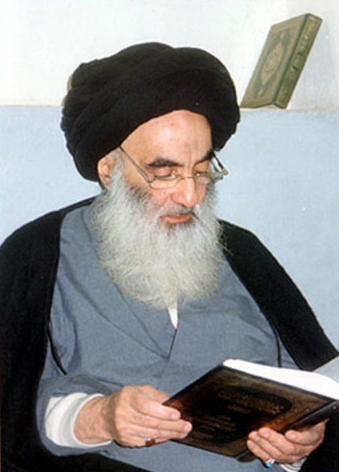
From the rulings of Grand Ayatullah Sayed Ali Hussaini Al-Seestani
Here are some rules in brief concerning the dying person, washing of the corpse and its shrouding, and burial procedure.1
Before Death
- It’s a matter of obligatory precaution that one should move the dying person in the direction of the qiblah during the last moments of his life. This is to be done by placing him on his back with his feet pointing towards the qiblah as though if he sits up, his face would be facing in that direction.
It is recommended to read and ask the dying person to repeat the testament of belief (shahãda) concerning the Oneness of God and the faith in Prophet Muhammad (s.a.w.) and the Imams (a.s.). - It is recommended to close the eyes of the dead person, their mouth, stretch their arms along their sides, straighten their legs, cover the body with a sheet of cloth, recite the Qur’ãn, and light up the room in which they lived. It is disliked to leave the corpse alone.
- After getting rid of the impure (najis) elements that are on the body of the dead person (e.g., blood, semen, etc.), the corpse has to be given three ablutions as follows:
- First wash it with sidr water. That is, water to which a little of sidr has been added.2
- The second wash is with camphour water. That is, water to which a little bit of camphour has been added.
- The third wash is with pure water.
If sidr is not available, then it is precautionarily obligatory to wash the corpse with pure water instead. Similarly, if camphour is not available, it is precautionarily obligatory to wash it with pure water instead. Then it should be washed the third time with pure water. In such a case, after the three washings, one tayammum should be performed on the corpse. - It is necessary that the ablution given to the corpse be of the tartibi kind: that is, the body should be washed in proper sequence with the head and the neck first, then the right side of the body, and then the left side.
- The person washing the corpse must be of the same gender as the dead person. So, a male should wash a male corpse, and a female should wash a female corpse. However, husband and wife are allowed to perform ablution to one another; although it is better that the washing be done with the body covered with a sheet of cloth.
If a person of the same gender is not available, then, based on obligatory precaution, those of the opposite gender who are mahram to the deceased can perform it. Mahram means those relations with whom marriage is forbidden because of blood relationship or nursing (suckling) relationship or marriage, like brother and sister [or son-in-law and mother-in-law]. However, it is better that the washing be done with the body covered with a sheet of cloth. Unity of gender is not required when giving ablution to a corpse of a child that had not reached the age of discerning the right and wrong.3 - Based on obligatory precaution, the person performing ablution must be a mu’min. If neither a mu’min of the same gender as the deceased is available nor a mahram [even of the opposite gender], it is permissible that a Muslim of the same gender can wash the deceased.
If even a Muslim is not available, then the deceased can be washed by an Ahlul Kitãb person [that is, a Jew, a Christian or a Zoroastrian] of the same gender with the condition that the person should first wash himself and then perform ablution to the corpse. If even an Ahlul Kitab person of the same gender is not available, the duty of performing ablution to the corpse is lifted, and the deceased should be buried without it.
- After giving the ablution, it is wãjib to do tahnít. Tahnít means to rub camphour powder (which has maintained its fragrance) on the seven parts of the body that touch the ground in a posture ofsajdah: the forehead, the palms, the knees, and feet toes. It is preferable to start tahnít with the forehead and end with the palms.
- After tahnít, the deceased has to be shrouded in three pieces of cloth as follows:
- The mi’zar: a piece of cloth [like an apron] that must cover the body between the navel and the knees, based on obligatory precaution.
- The qamís: a piece of cloth [like a shirt] that must cover the body from the shoulders to mid shank, based on obligatory precaution.
- The izãr: a large sheet of cloth that must cover the entire body. Based on obligatory precaution, it must be long and wide enough so that the top and the bottom parts could be tied [with a string], and the front parts overlap.
The Prayer
- It is obligatory to say prayer over a deceased Muslim’s body of six years and over. Based on obligatory precaution, prayer should also be said over the body of a child who could do the salãt even if he or she had not yet reached the age of six.
- The way to conduct prayer on the deceased:
The person praying should recite five takbírs (say “Allãhu Akbar”). However, it is preferable that after each takbír he says the following:
After the first takbir, he should say the shahãdatayn (declaration of faith in God and Prophet Muhammad).
After the second takbír, he should say the salawãt on Prophet Muhammad (s.a.w.) and his progeny (a.s.).
After the third takbír, he should say a prayer for the believing men and women.
After the fourth takbír, he should say a prayer for the deceased.
He should say the fifth takbír and end the salãt.
Burial
- It is necessary to bury the deceased after the salãt. Burial is intended to protect the body from wild animals and its smell is contained within so that no one is annoyed by it. The body should be placed on its right side with the face towards the qiblah.
- It is not permissible to bury a deceased Muslim in the graveyard of non-Muslims, except if a section of that graveyard is specifically reserved for Muslims. Similarly, no non-Muslim can be buried in the graveyard of Muslims.
- When it is neither possible to get a grave for a deceased Muslim in the graveyard of Muslims, nor transfer the body to a Muslim country for burial in a Muslim graveyard, that deceased Muslim may be buried in the graveyard of non-Muslims.
- It has been narrated from the Prophet (s.a.w.) that he said, “No time comes upon the dead person more difficult than the first night [of burial]. Therefore have mercy on your dead ones by giving charity [on their behalf]. If one does not have anything [to give in charity], one of you should pray two rak‘ah for them: in the first rak‘ah, after al-Hamd, recite Ãyatu ’l-kursi; and in the second rak‘ah, afteral-Hamd, recite surah al-Qadr ten times. After salãm, say: ‘Allãh humma salli ‘alã Muhammadin wa Ãli Muhammad, wab‘ath thawãbahã ila qabri fulãn;’4 and name the deceased person [instead of fulãn].”5
1. For further details, see Sayyid as-Sistani, Minhaju 's-Saliheen, vol. 1, p. 95 ff.; as-Sistani, al-Masa'ilu 'l-Muntakhaba, p. 50 ff.
2. Translator's Note: Sidr is name of a lotus tree; "sidr water" means the water to which sidr leaves have been added.
3. Translator's Note: The age of discerning right and wrong (tamyiz) is different from the age of maturity (bulûgh). The latter is 9 for girls and 15 for boys but the former could be at five or six.
4. "O Allah, send Your blessings upon Muhammad and the Family of Muhammad, and send the reward of this prayer to the grave of x."
5. Sayyid as-Sistani, al-Masa'ilu 'l-Muntakhaba, p. 63.
Sunday, 7 April 2013
Who's a true Shia? Hadith 10
Imam Sadiq has said: “He who believes in seven things is
(regarded as) believer: the disavowal of the Taghutain (Jibt and
Taghut) (20), the declaration of the divine leadership (of the Imams),
the belief of Raja’t (21), the legality of the temporary marriage (22), the
illegality of the (flesh of) eel, and the illegality of passing the (wet)
hands over the slippers. (23)”(24)
______________________________
20 Refers to the 2 who usurped the Land of Fadak.
21 It is about bodily resurrection of the 14 masumeen and their return to
this word before the Day of Judgment.
22 Muta’h
23 ‘Masah’ on slippers during wudhu
24 Sifat ash-Shia, hadith 41
Saturday, 6 April 2013
Imam Naqi makes a lion come out of no where...
Seeing this, Imam Ali an-Naqi (as) cast a wrathful glance on the pillow on which there was a picture of a lion and upon which this Indian magician was reclining and resting; he slapped on the pillow and addressed the lion, "What are you looking at, eat up this magician"! As if the lion was waiting for a command from the Imam (as) that it immediately pounced upon the magician and within a matter of seconds, it ate and gobbled him up and then went back to its original shape of a picture!! All the people gathered there were completely spellbound and a deathly silence prevailed. The Imam (as) got up to go when Mutawakkil came begging for the magician to be restored back to life.
The Imam (as) turned around and said, "You shall never get him back, you tried to impose an enemy of Allah upon Allah's friends"; saying this the Imam (as) left." [This has been taken from the book Mukhtar al-Kharaij wal Jaraih, p.210.]
Imam Naqi was challenged by Mutawakill and his men every now and the, from the topic of his Imamate, to his clothing and repute... Imam Naqi gave this magician, whom was sent by Mutawakil, such a death, that some books say people fainted. This is the power of Imam Ali Al-Hadi An-Naqi (as)!
Imam Sadiq (as) about Bondage
The roots of conduct have four aspects: conduct with Allah, conduct
with the self, conduct with creation (i.e. people), and conduct with this
 world. Each of these aspects is based upon seven principles, just as there
are seven principles of conduct with Allah: giving Him His due, keeping
His limits, being thankful for His gift, being content with His decree, being
patient with His trials, glorifying His sanctity, and yearning for Him.
The seven principles of conduct with the self are fear, striving, enduring
harm, spiritual discipline, seeking truthfulness and sincerity, withdrawing
the self from what it loves, and binding it in poverty (faqr).
The seven principles of conduct with creation are forbearance, forgiveness,
humility, generosity, compassion, good counsel, justice and
fairness.
The seven principles of conduct with this world are being content with
what is at hand, preferring what is available to what is not, abandoning
the quest for the elusive, hating overabundance, choosing abstinence
(zuhd), knowing the evils of this world and abandoning any desire for it,
and negating its dominance.
When all these qualities are found in one person, he is then one of
Allah's elite, one of His close bondsman and friends (awliya')
[From the book: Lantern of Path, Chapter 2]
Imam Ali (as) said: Your eyes can't see Allah, but the eyes of your heart can... Just open them...
People asked how shall we?
Imam Ali (as) said: When you strengthen your Eiman, then they open, right now they're closed in a sleep!
Friday, 5 April 2013
Who's a true Shia? Hadith 9
Abu Abdullah (Imam Sadiq) has said: “The believer is firmer than
blocks of iron. Iron is changed when it is subjected to fire, while the
believer will not be changed even if he is killed, cut by a saw, and
then killed a new.” (19)_______________________________________
19 - Sifat ash-Shia, hadith 47
Who's a true Shia? Hadith 8
Zurarah narrates that Abu Abdullah(Imam Sadiq) said:
“The young boy (15) will disappear from the public sight before his rise (with
divine power)” The narrator has said, “I then asked, "Why (would
that have to take place)?” The Imam said, “He will be afraid.” (16)
He pointed out with his hand to his stomach. Then he said, “O
Zurarah, He is the one whose reappearance is expected. He is the
one whose coming to this world through birth will be doubted.
Certain people will say, “His father died without leaving any son
behind.” certain others will say, “Just before the death of his father,
his mother conceived him.” Still others will say, “He was born two
years before the death of his father.” He is the one whose
reappearance is expected. The fact is that Allah, the Most Majestic,
the Most Gracious, loves to try and test the Shia. It is in such a
condition that people of falsehood will raise doubts, O Zurarah.” The
narrator has said, “May Allah take my soul in service for your cause,
if I will be alive at the time of his rise with divine power what should
I do?” The Imam said, “O Zurarah, if you will live up to such time
then say the following prayer. “O Lord make me know You for if you
would not make me know You I will not know Your prophet. O Lord,
make me know Your Messenger, for if You would not make me know
your Messenger I will not know the one who possesses Your
authority over the creatures. O Lord make me know the one who
possesses Your authority over the creatures for if You will not make
me know him I will stray away from my religion. (17””18)
___________________________________________________________
15 Refers to the 12th Imam, Imam al-Mahdi (a.j.f)
16 Fear for the safety of religion, as he is the protector of religion.
17 Known as Dua-e-Maa’rifah.
18 Al-Kafi, 1:337
“The young boy (15) will disappear from the public sight before his rise (with
divine power)” The narrator has said, “I then asked, "Why (would
that have to take place)?” The Imam said, “He will be afraid.” (16)
He pointed out with his hand to his stomach. Then he said, “O
Zurarah, He is the one whose reappearance is expected. He is theone whose coming to this world through birth will be doubted.
Certain people will say, “His father died without leaving any son
behind.” certain others will say, “Just before the death of his father,
his mother conceived him.” Still others will say, “He was born two
years before the death of his father.” He is the one whose
reappearance is expected. The fact is that Allah, the Most Majestic,
the Most Gracious, loves to try and test the Shia. It is in such a
condition that people of falsehood will raise doubts, O Zurarah.” The
narrator has said, “May Allah take my soul in service for your cause,
if I will be alive at the time of his rise with divine power what should
I do?” The Imam said, “O Zurarah, if you will live up to such time
then say the following prayer. “O Lord make me know You for if you
would not make me know You I will not know Your prophet. O Lord,
make me know Your Messenger, for if You would not make me know
your Messenger I will not know the one who possesses Your
authority over the creatures. O Lord make me know the one who
possesses Your authority over the creatures for if You will not make
me know him I will stray away from my religion. (17””18)
___________________________________________________________
15 Refers to the 12th Imam, Imam al-Mahdi (a.j.f)
16 Fear for the safety of religion, as he is the protector of religion.
17 Known as Dua-e-Maa’rifah.
18 Al-Kafi, 1:337
Defining a Nasibi, how they hate Imam Ali (as)!
For an introduction to the literal meaning of Nasibi we have relied on the definitions stipulated by several recognized Ahl’ul Sunnah scholars:
“Hadith narrated by Marwan can be found in al Bukhari, even though he was a Nasibi, in fact he was leader of that wicked cult.”

- Qamus, page 53, Chapter
- Taj al Uroos, Volume 4 page 277
- Lisan al Arab, page 762
- Hadiya al Sahil ay adalta al Masail, page 96
- Tadrib al-Rawi, Volume 1 page 328
- Akrab al Muwarid, page 2
- Siyar Alam al-Nubala, Vol 4 page 37 & vol 18 page 201
- Al-Talimaat Al-Mukhtasar Ala Matan Al-Aqida al-Tahawiyah, vol 1 page 203
Ibn Manzur states in In Lisan al Arab:
والنَّواصِبُ قومٌ يَتَدَيَّنُونَ ببِغْضَةِ عليّ عليه السلام
“Nawasib are those who embrace the hate of Ali (as) as part of their faith”
May Allah’s curse be upon such people!
In Taj al Uroos, we read:
النَّوَاصِبُ والنّاصِبيَّةُ وأَهْلُ النَّصْبِ : وهم المُتَدَيِّنُون بِبغْضَةِ سيّدِنا أَميرِ المُؤْمنينَ ويَعْسُوب المُسْلِمينَ أَبي الحسنِ عَلِيّ بْنِ أَبي طالبٍ رضِيَ الله تعالى عَنْهُ وكَرَّم وجْهَهُ
Nawasib: “Are those who hate the commander of believers and the leader of Muslims Abu al-Hassan Ali bin Abi Talib [ra]“.
Imam Jalaluddin Suyuti states in Tadrib al-Rawi:
بالنصب وهو بغض علي رضي الله عنه وتقديم غيره
“Nasb is hating Ali [ra] preferring the others”
We read the following in the margin of Imam Dhahabi’s famed book Siyar Alam al-Nubala (Vol 4 page 37) by Shaykh Shu’aib al-Arnaout:
من الناصبية وهم المنافقون المتدينون ببغضة علي رضي الله عنه ، سموا بذلك لأنهم نصبوا له وعادوه
“From Nasibiyah, there comes Nasibi and they are hypocrites, they have made the hate of Ali as their religion. This name was given to them because they have made the hate of Ali as their aim of life (Nasbu) and had enmity for him”
In volume 18 page 201 we read:
والنصب هو: بغض علي رضي الله عنه، وموالاة معاوية
“Nasb means to have grudge against Ali (ra) and love Muawiya”
One of the famous Wahabi scholars from Saudi Arabia namely Shaykh Saleh al-Fawzan stated in his book ‘Al-Talimaat Al-Mukhtasar Ala Matan Al-Aqida al-Tahawiyah’:
وأما النواصب: فيوالون الصحابة، ويبغضون بيت النبي عليه الصلاة والسلام،
Several authoritative Sunni works are being relied on for this section. Al Muhaddith Shah Abdul Aziz stated in Tauhfa Ithna Ashari:
ولذلك سموا بالنواصب؛ لنصبهم العداوة لأهل بيت النبي عليه الصلاة والسلام.
“The Nawasib, befriend the Sahaba and hate the family of the prophet (pbuh), therefore they have been called Nawasib for hating Ahlulbayt of the prophet (pbuh)”.
Hadiya al Sahil elaborates yet further:
“Nasibi ideology is a type of flawed character that is very bad, in its worst form is has a hatred for the Imam of Guidance Ali, and takes this as part of its Deen / Iman”.
Note that we have proven the definition by faithfully translating the works of Ahl’ul Sunnah and we invite our Sunni brothers and sisters to ponder. Do not be fooled by these long beards because among these are the enemies of Imam ‘Ali (as). Their enmity is evident from their speeches, but is disguised in such a way that the ordinary man would not recognise it. Their methodology is just like that of hypocrites. They read the Kalima with their tongues but their hearts are polluted with hatred and the proof is their animosity towards ‘Ali (as). Just like a bad foot odour they carry the stench of Nasibi thought everywhere they go – seeking to deceive the majority by proclaiming that this is the correct faith of Ahl’ul Sunnah wa al Jamaa.
To recognise the Nasibi let us investigate the matter further.
Pinpointing the Nasibi founding forefathers
Whilst defining a Nasibi the pen of the Ahl’ul Sunnah Ulema has been somewhat reluctant to pinpoint where Nasibis existed in history and who their Imams were.
Al Muhaddith Shah Abdul Aziz makes two interesting comments in his Hidayatul Majeediyah, page 813:
“One who fights Ali [r] with enmity is a kaffir according to the ijma of Ahl’ul Sunnah.”
“Whoever deems Ali [r] to be a kaffir or opposes his khilafath is a kaffir, this trait was evident amongst the Khawaarij at Naharwaan”.
Haddeeya Mujedeeya by Al Muhaddith Shah Abdul Aziz Dehlavi page 813
On the same page Shah Abdul Aziz seeks to protect Mu’awiya by pointing out that Mu’awiya does NOT come within this definition since:
“Mu’awiya and the people of Syria sought revenge for the killing of Uthman”.
Unfortunately Shah’s efforts to protect Mu’awiya and his supporters are in vain because it is an established fact that Mu’awiya and his clansmen:
- Opposed the khilafath of Imam Ali (as)
- Bore enmity to Imam Ali (as) by cursing him
- Fought him
All of these points have been discussed at length in our refutation of Ansar’s defence of Mu’awiya.
Hence we have pinpointed those that first wore the Nasibi garb, now let us delve further.
Identifying and recognising Nasibi ideology
“Hadith narrated by Marwan can be found in al Bukhari, even though he was a Nasibi, in fact he was leader of that wicked cult.”
Maulana Sayyid Lal Shah Bukhari attributes a different name as the actual Imam of the Nasibis, he writes:
“The founder of Nasibi ideology was Mu’awiya”.
Isthakhlaaf ai Yazid by Maulana Sayyid Lal Shah Bukhari page 216
Isthakhlaaf ai Yazid by Maulana Sayyid Lal Shah Bukhari page 216
In Al-Bidayah al-Nihayah, Volume 8 page 259 Ibn Kathir states:
ولما كان متوليا على المدينة لمعاوية كان يسب عليا كل جمعة على المنبر،
“When Marwan was a governor of Mu’awiya in Madina, he used to curse Ali on each Friday from the pulpit” .

(Click to enlarge the image)
In Fatwa Azizi by Shah Abdul Aziz we read that:
“Mu’awiya would curse Ali (as)”.
Fatwa Azizi by al Muhaddith Shah Abdul Aziz Dehlavi, page 123
Fatwa Azizi by al Muhaddith Shah Abdul Aziz Dehlavi, page 123
Hence Marwan and Mu’awiya were both Nasibis. They were enemies of Ali and embraced this as part of their faith. Their followers are also Nawasib. Their hatred takes numerous guises. In their lectures and writings their Nasibi thought becomes evident as does their hatred for the Shi’a of Ali. This party who pass fatwas of Kufr upon the Shi’a are in fact the spiritual descendants of Marwan and Mu’awiya and thus they adhere to an illegitimate belief formulated in the minds of the enemies of Ali (as).
From the outside one might mistakenly assume that Nasibis are pious adherents of the Sunnah. In their speeches they advocate the importance of adhering to the Sunnah, they wear long caftans, carry miswak, grow long beards, and lick their fingers after a meal – why? Because they will tell you that this was the Sunnah of the Prophet (s). It is curious that they adhere to such minute details, mimicking the Prophet (s) even in his dress sense and yet the important Sunnah, namely that of loving and adhering to the teachings of his Ahl’ul bayt (as) is rejected by them. What is even worse is the fact that they display hatred towards Ahl’ul bayt (as), evident from the fact that they regard their enemies as their Imams.
The casual observer may indeed be taken in by their acts of charity, Islamic circles, lengthy prayers etc – but the reality is these deeds are of no avail, for Rasulullah (s) declared:
“Hatred of Ali is such a thing that no good deeds will benefit, whilst love of ‘Ali is such a thing that no bad deeds will harm you”
al-Nasa’ih al-Kaafiyah page 67
al-Nasa’ih al-Kaafiyah page 67
Lesson 1; Death part 4 & last 5
Those A’mal which prove beneficial during death and eases it’s tribulations:
Reciting Surah-al-Yaseen, Surah-as-Saffat and the following supplication (du'a) eases the tribulation during death:
لا إلهَ إلاّ الله الحَليمُ الكَريمُ. لا إلهَ إلاّ الله العَلِيِّ العَظيمُ. سُبْحانَ اللهِ رَبِّ السَّمواتِ السَّبْعِ وَرَبِّ الأرَضينَ السَّبْعِ وَما فِيهِنَّ وَما بَيْنَهُنَّ وَما فَوقَهُنَّ وَما تَحتَهُنَّ وَهوَ رَبُّ العَرشِ العَظيمِ وَالحَمدُ للهِ رَبِ العالَمينَ.
Shaikh Sadooq narrates from Imam Ja'far-as-Sadiq (A.S.) that he said, “For the person who fasts on the last day of the month of Rajab, Allah will save him from the after effects of death”. Fasting on the 24th of Rajab carries great reward (Sawab). One of it's merits is that when the Angel of death comes to remove his spirit (Rooh), he comes in the form of a handsome youth carrying a bowl of the pure drink (Sharabe Tahoora) and offers him to drink. The dying person does so and dies in peace.
The Holy Prophet (S.A.W.S.) says that if a person recites four unit (Rak'at) Namaz on the night of 7th Rajab in a manner that in each unit (Rak'at) after Surah-al-Hamd recites thrice Surah-at-Tawheed, once Surah-al-Falaq, and once Surah-an-Naas. After finishing the Namaz, sends Salawat on Us and recites ten times Tabeehate Arba.
سُبْحانَ اللهِ وَالحَمدُ للهِ وَلا إلهَ إلاّ اللهُ واللهُ أكْبَرُ
Almighty Allah will offer him shelter under the Throne (Arsh), and give him reward of a person fasting in the month of Ramazan. Till the time he finishes the prayers, the Angels pray for his forgiveness. Allah will ease the pangs of death on him, and save him from the squeeze in the grave (Fishare Qabr). He will not die until he sees his place in Paradise, and will be safe from the hardships of Resurrection (Qayamat).
Shaikh Kaf'ami quotes from the Holy Prophet (S.A.W.S.), that he said that a person who recites the following supplication (Du'a) 10 times daily, Allah ill forgive four thousand major sins (Gunahane Kabeera) of his, offer him refuge from one lac calamities at the time of death, the squeeze in the grave (Fishare Qabr) & Qayamat. Allah will also save him from satan (shaitaan) and his army, will pay off his dues and save him from troubles and anxieties.
أعْدَدْتُ لِكُلِّ هَولٍ لا إلهَ إلاّ اللهُ وَلِكُلِّ غَمٍّ وَهَمٍّ ما شاءَ اللهُ وَلِكُلِّ نِعْمَةٍ اَلحَمْدُ للهِ وَلِكُلِّ رَخاءٍ الشُّكرِ للهِ وَلِكُلِّ اُعْجُوبَةٍ سُبْحانَ اللهِ وَلِكُلِّ ذَنْبٍ اَسْتَغْفِرُ اللهَ وَلِكُلِّ مُصيبَةٍ إنّا للهِ وإنّا إلَيْهِ رّاجِعونَ وَلِكُلِّ ضَيْقٍ حَسْبِيَ اللهُ وَلِكُلِّ قَضاءٍ وَقَدَرٍ تَوَكَّلْتُ عَلى اللهِ وَلِكُلِّ عَدُوٍّ اِعْتَصَمْتُ باللهِ وَلِكُلِّ طاعَةٍ وَمَعْصِيَةٍ لا حَولَ ولا قُوَّةَ إلاّ بِاللهِ العَلِيِّ العَظيمِ.
The recitation of the following du'a seventy times carries great reward. The least of which is that he will be given glad tidings that he will enter Paradise
يا أسمَعَ السَّامِعينَ وَيا أبْصَرَ المُبْصِرينَ ويا أسْرَعَ الحاسِبينَ وَيا أحْكَمَ الحاكِمينَ
Shaikh Kulaini relates from Imam Ja'far-as-Sadiq (A.S.) that he said that the one who recites Surah-az-Zilzal in the Supererogatory Prayers (Nafela), Allah will save him from earthquake, lightening and the calamities of the land and sky. And during death He will send this Surah in the form of a handsome youth who will sit besides him and request the Angel of death (Malekul Maut to remove his spirit with ease.
Turning away from the Right path during death.
It means that a person should turn away from the Right Path (Sirat-al-Mustaqeem) during death. At the time of death satan (shaitaan) comes to the dying man adn tries his best to deceive him and puts him in doubt, so as to turn him away from faith (Eeman). Fakhr Muhaqqeqeen says that, “A person who wishes to remain safe from the mischief of shaitaan at the time of death should preserve five proofs regarding the fundamental principals of faith (Usoole Deen) in his mind, and present it to Allah's custody, so that during death these may come as a handy against shaitaan's deceit. Then he should recite the following supplication (du'a):
اَللّهُمَّ يا أرْحَمَ الرّاحِمينَ إنّي قّدْ أوْدَعْتُكَ يَقينِي هذا وَثَباتَ دِيني وأنْتَ مُسْتَودع وقَدْ أمَرْتَنا بِحِفظِ الوَدائِعَ فَرُدَّهُ عَلَيَّ وَقْتَ حُضُورِ
مَوْتي.
Fakhrul Muhaqqeqeen also says that those who wish to reamin safe from shaitaan's mischief of abandoning faith during death, should recite dua'e Adeelah with a pure mind and heart. (Du'ae Adeelah is found in all the renowned books of du'as, and also in the first volume of Mafateehul Jinaan by the same author).
Shaikh Toosi relates from Mohammad b. Sulayman Daylami that I asked Imam Ja'far-as-Sadiq (A.S.) that, “Some of your faithful followers (Shi'ahs) say that faith (Eeman) is of two types: (1) Permanent & firmly established, and (2) One which has been given to us as a trust, and also can be ruined. Please give me a du'a by which my faith may also become permanent and first established.” Imam (A.S.) told him to recite the following du'a after every obligatory prayers (Wajib Namaz):
رَضِيتُ بِاللهِ رَبّاً وَبِمُحَمَّدٍ صَلّى اللهُ عَلَيهِ وآلِهِ نَبِيَّاً وبِالإسْلامِ دِيناً وبِالقُرآنِ كِتاباً وَبِالكَعْبَةِ قِبْلَةً وبِعلِيٍّ وَلِيّاً وإماماً وبِالحَسَنِ والحُسَينِ وعَلِيّ بنِ الحُسَينِ ومُحَمَّدِ بنِ عَليٍّ وجَعْفَرِ بنِ مُحَمَّدٍ وَمُوسى بْنِ جَعْفَرٍ وعَليِّ بْنِ مُوسى ومُحَمَّدِ بْنِ عليِّ وعَليِّ بْنِ مُحَمَّدٍ والحَسَنِ والحُجَّةِ بْنِ الحَسَنِ صَلَواتُ اللهِ عَلَيْهِمْ أئِمَّةً اللّهُمَّ إنّي رَضيتُ بَهِمْ أئِمّةً فارْضِني لَهُمْ إنَّكَ
علي كُلِّ شَيءٍ قَدير.
Those acts which prove beneficial during death.
The best deed is to perform Prayers (Namaz) on time. It is related that there is no person in the east or the west on whom the sight of the Angel of death (Malekul Maut) does not fall at least five times during the time of Prayers. Whenever the time of death of that person comes, the Angel of death (Malekul Maut) recognizes him and helps him to recite Kalema and shuns away satan (shaitaan) from him. It is narrated that once Imam Ja'far-as-Sadiq (A.S.) wrote to a person: “Do you wish that you may face death while on the Right path? And do you wish that your spirit (Rooh) may be removed from your body while you be performing good deeds? Then hold Allah's orders dear to yourself and obey them, and do not waste the bounties offered by Him by being disobedient to Him, and do not take undue advantage of His Mercy, nor become arrogant. Honour those who follow Us and respect those who love Us”.
The recitation of Dua-e-Tamjeed (Du'a No. 11) of ‘Saheefae Kamelah’ is beneficial, so as to die while on the Right path and to be saved from turning away from it.
To recite the following supplication (dua) in the Namaz of sundays in the month of Zilqad:
رَبَّنا لا تُزِغْ قُلُوبَنا بَعْدَ إذْ هَدَيْتَنا وَهَبْ لَنا مِنْ لَدُنْكَ رَحْمَةً إنَّكَ أنْتَ الوَهّابُ
The other beneficial acts are: To always recite Tasbeehe Fatema (A.S.) (34 times Allaho Akbar, 33 times Alhamdo Lillah, and 33 times Sub-hanallah), to wear ar ring of Cornelian (Aqeeq, specially of red color), it is better if the following is engraved on it: “Mohammadun Nabiyyullahe wa Aliyyun Waliyyullahe”. To recite Surah-al-Mo'menoon every friday, to recite the following supplication (du'a) seven times after morning (Subh)
and evening (Maghrib) Prayers:
بِسْمِ اللهِ الرَّحْمنِ الرَّحيمِ لا حَوْلَ وَلا قُوَّةَ إلاّ بِاللهِ العَلِيِّ العَظيمِ
To recite 8 units (Rak'at) Namaz on the night of 22nd Rajab, in each unit (Rak'at) after Surah-al-Hamd recites 7 times Surah-at-Tawheed. After ending Namaz, recite 10 times ‘Salawat’, and 10 times ‘Istighfar’ (Astagferullah Rabbi wa atoobo Ilayh).
Sayyed ibne Tawoos quotes the Holy Prophet (S.A.W.S.) as saying, that if a person recites 4 units (Rak'ats) Namaz in the month of Sha'ban, such that in each unit (Rak'at) after Surah-al-Hamd recites 50 times Surah-at-Tawheed, then during death his spirit will be removed with ease, and his grave will become spacious, and on the day of Qayamat when he comes out of his grave, his face will be shining bright like a full moon and kalmae Shahadat will be on his lips”.
The following Incidents will prove helpful for further explanation:
Incident - 1
Fuzail bin Ayaz who was one of the great Sufi Saints, says that he had a pious and virtuous student. The student once fell ill, and when his death approached, Fuzail came to visit him and started reciting Surah-al-Yaseen. The student requested Fuzail to stop reciting it. Fuzail then requested him to recite the Kalema, but he refused to do so and said that he was sick of it (Allah's refuge . Fuzail was shocked and felt sad at the attitude of one of his pious students, he returned home and did not come out for some days. One night he dreamt that the same student was being dragged to the fire of hell by the Angels of wrath. Fuzail stopped them and inquired of his student as to why was he being treated in that manner, when he was always a pious and devout student of his. He asked him as to what was the reason behind his painful end. The student replied that he had three bad habits in him: (1) Slander, (Woe be on every slanderer & defamer) Surah-al-Humazah: 1), (2) Jealousy, (Verily jealousy destroys faith (Eeman) in the same manner as fire destroys wood. - Usoole Kafi), and (3) Creating mischief, (Cheating mischief is graver than murder) - (Surah-al-Baqarah: 217). The student also told Fuzail that he once committed an act which also proved harmful for his Hereafter. He said that once he had a disease, and the doctor had prescribed him to drink wine for it's cure. The doctor told him that if he did not do so he would never be cured. He did as the doctor said. Because of this and the other 3 bad habits his end was such painful, and he died in the state of shame.
For further explanation of the above narrative, I state below an incident quoted by Shaikh Kulaini, who quotes Abu Baseer as saying that, Once I was seated in the presence of Imam Ja'far-as-Sadiq (A.S.), when Umme Khalid binte Ma'badiyyah came and told the Imam (A.S.) that since she knew the prohibition of it's use, she had come to the Imam (A.S.) to take advice regarding it. Imam Sadiq (A.S.) asked her, “What stopped you from using it”? She said that being one of His devout followers, she wished to be saved from shame, and on the day of Qayamat if she be questioned about it she could reply that it's use (or prohibition) was ordered to her by the Imam (A.S.) himself. The Imam (A.S.) turned towards me and said, “O Abu Mohammad! (referred to Abu Baseer), do you pay heed to what this woman says”? Then Imam Sadiq (A.S.) answered, “By Allah I never give you permission to consume even a drop of it, for if you do so, you shall have to regret when your spirit reaches here”. and Imam (A.S.) pointed towards his neck and repeated the sentence thrice, and took the woman's assurance that she had understood it well.
Incident - 2
Shaikh Bahai states in his book ‘Kashkol’ that there was a person who had spent his entire life in pleasures and luxuries of this world. When he was about to die, the people gathered around him and requested him to recite the ‘Kalema’. But instead of the ‘Kalema’ the dying man said: Where is that woman who in a state of exhaustion came to me and asked me the way to the public bath (named Manjab). He said so because one day a virtuous and beautiful woman came out of her house to have bath in a famous bath house named ‘Manjab’. She forgot her way and was exhausted searching it. She saw this man standing near a door and asked him the way to it. He pointed towards his house and said that the same was the bath house named ‘Manjab’.As soon as the woman entered there in, the man locked the door and intended to have illicit physical relation with her. The virtuous woman sensed that there was no escape from his lustful fold, and hence pretended to be interested in him. She said that she was a state of uncleanliness and was proceeding for a bath. She told the man to go and get some scent for her so that she may perfume and adorn her self for him, and also to get something to eat as she was exhausted. The man was deceived by her words and went to the market to buy things. As soon as he stepped outside, the woman thanked Allah for preserving her chastity and ran away. When the man returned, he understood his mistake and regretted. Now when his end neared, her remembered this indecent act and instead of reciting the ‘Kalema’ said the above words.
The Incident is to be reflected upon that when the person was about to die, the sin (even though he had not committed it, but had intented) stopped him from reciting the ‘Kalema’. Shaikh Kulaini quotes Imam Ja'far-as-Sadiq (A.S.) as saying that, “One who does not pay even one Qeerat of Zakat due on him (Qeerat is equal to 21 dinars), will die the death of a jew or a christian”. The same tradition (hadees) is also said about the person who intentionally does not perform Haj even after being capable of doing so.
From Death till Grave
After the spirit (Rooh) is separated from the body, it lingers on the top for sometime. Thereafter the Spirit of the believer is taken to the Heavens,
while that of a non-believer below. When a believer's bier is being carried, he calls out: “Hasten me to my eternal destination”, while a non-believer calls out: “Do not make haste to bury me in my grave, making way for my chastisement”. During bath of the believer's dead body, the Angels ask him if he desires to return to the world back to his kith & kin, to which he replies that he does not intend to go back to the world of miseries and misfortune.
The Spirit of the dead remains present and witnesses the bath given to his body. It is also narrated that when the bath is being performed, the dead person feels as if he is being thrown from height, and the rough hands of the person performing the bath seems to be smiting him. Hence it is necessary that bath should be performed with gentle hands.
The Spirit hears the voices of the people who have come to attend his funeral. Hence it should be borne in mind that one should avoid talking during funeral. A woman in menses or nifaas (blood discharge after child birth), and a person in the state of pollution should avoid coming near the dead body, because it becomes the reason for the displeasure of the blessed Angels, who turn away in disgust. Such acts should be performed for the dead person which become the reason for Allah's blessings, viz. remembrance of Allah and Ahlulbait (A.S.), recitation of Qur'an etc.
It is also narrated that after the dead body is buried, the spirit returns back and maintains relation with the body. When it sees that the people are returning back, knows that from now on it is destined to live alone. It becomes restless, and says: “Alas! Those children of mine whom I brought up with love and care have abandoned me, and now my only companions are my deeds (A'amal) which I performed while alive”. The first glad tidings which a believer receives is in the grave: “Oh you who believe! Allah has forgiven your sins and the sins of those who attended your funeral”.
Subscribe to:
Posts (Atom)