Death

Debate

AhlulBayt

Hadith

Ghadeer

Friday

Imam Mahdi

Articles

Audio

O God, if the best for me with Thee lies in delaying the taking to task for my sake of him who has wronged me and in refraining from vengeance toward him until the Day of Decision and the Gathering of Disputants, then bless Muhammad and his Household, strengthen me from Thee with true intention and lasting patience, give me refuge from evil desire and the impatience of the greedy, and form in my heart the image of Thy reward which Thou hast stored away for me and the repayment and punishment which Thou has prepared for my disputant! Make this a cause of my contentment with what Thou hast decreed and my trust in what Thou hast chosen! Amen, Lord of the worlds! Thou art of bounty abounding and Thou art powerful over everything. Imam Sajjad (as) Sahifa-e-Sajjadiyah
Showing posts with label Islamic-laws. Show all posts

Thursday, 30 May 2013

General Islamic codes: ZAKAT OF FITRAH


From the rulings of Grand Ayatullah Sayed Ali Hussaini Al-Seestani
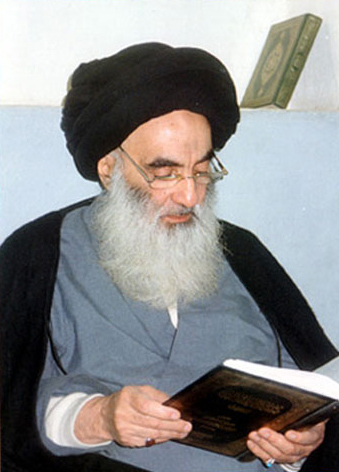
1999. At the time of sunset on Eid ul fitr night (i.e. the night preceding Eid day), whoever is adult and sane and is neither unconscious, nor poor, nor the slave of another, he should give, on his own behalf as well as on behalf of all those who are his dependents, about three kilos per head of wheat or barley or dates or raisins or rice or millet etc.
It is also sufficient if he pays the price of one of these items in cash. As per obligatory precaution, he should not give from that food which is not staple in his place, even if it be wheat, barley, dates or raisins.
2000. If a person is not in a position to meet his own expenses, as well as those of his family, for a period of one year, and has also no one who can meet these expenses, then he is a poor person, and it is not obligatory on him to pay Zakat of fitrah.
2001. One should pay Fitrah on behalf of all those persons who are treated as his dependents at his house on the nightfall of Eid ul fitr, whether they be young or old, Muslims or non-Muslims; irrespective of whether or not it is obligatory on him to maintain them, and whether they are in his own town or in some other town.
2002. If a person appoints his dependent who is in another town, to pay his own fitrah from his property, and is satisfied that he will pay the fitrah, it will not be necessary for the person to pay that dependent's fitrah.
2003. It is obligatory to pay the fitrah of a guest who arrives at his house before sunset on Eid ul fitr night, with his consent, and he becomes his temporary dependent .
2004. The fitrah of a guest who arrives at his house on the night of Eid ul fitr before sunset, without his consent, and stays with him for some time, is also, as per obligatory precaution, wajib upon the host. Similarly, if he is forced to maintain someone, his fitrah will also be obligatory upon him.
2005. If a guest arrives after sunset on Eid ul fitr night, and is considered to be dependent upon the master of the house, payment of his fitrah is obligatory on the master of the house, as an obligatory precaution; but otherwise it is not obligatory, even if he may have invited him before sunset and may have broken his fast at his house.
2006. If a person is insane at the time of sunset on the night of Eid ul fitr, and his insanity continues till Zuhr on Eid ul fitr, it is not obligatory on him to pay the fitrah. Otherwise it is necessary for him as an obligatory precaution to give fitrah.
2007. If a child becomes baligh, or an insane person becomes sane, or a poor person becomes self sufficient during sunset, and satisfies the conditions of fitrah becoming obligatory on him, he should give fitrah.
2008. If it is not obligatory on a person to pay fitrah at the time of sunset on the night of Eid ul fitr, but necessary conditions making fitrah obligatory on him develop before Zuhr on Eid day, the obligatory precaution is that he should pay fitrah.
2009. If a non-Muslim becomes a Muslim after the sunset on the night of Eid ul fitr, it is not obligatory on him to pay fitrah. But if a Muslim who was not a Shi'ah becomes a Shi'ah after sighting the moon, he should pay fitrah.
2010. It is Mustahab that a person who affords only one sa'a (about 3 kilos) of wheat etc. should also pay fitrah. And if he has family members and wishes to pay their fitrah as well, he can give that one sa'a to one of his family members with the intention of fitrah and that member can give it to another family member, and so on, till the turn of the last person comes; and it is better that the last person gives what he receives to a person who is not one of them. And if one of them is a minor, his guardian can take fitrah on his behalf, and the precaution is the thing taken for the minor should not be given to anyone else.
2011. If one's child is born after the sunset on the night of Eid ul fitr, it is not obligatory to give its fitrah. However, the obligatory precaution is that one should pay the fitrah of all those who are considered one's dependents after sunset, till before the Zuhr of Eid.
2012. If one who was dependent of a person, and becomes dependent of another before sunset, fitrah is obligatory on the other person whose dependent one has become. For example, if one's daughter goes to her husband's house before sunset, her husband should pay her fitrah.
2013. If the fitrah of a person is obligatory on another person, it is not obligatory on him to give his fitrah himself.
2014. If it is obligatory on a person to pay the fitrah of another person, but he does not pay it, its payment will be, as an obligatory precaution, obligatory on the latter. So, if all the conditions mentioned in rule 1999 are fulfilled, he must pay his own fitrah.
2015. If it is obligatory on a person to pay the fitrah of another person, his obligation will not end if the latter himself pays his own fitrah.
2016. In the case of a wife who is not maintained by her husband, is she is dependent upon someone else, that person will have to pay her fitrah. But if she is not dependent on anyone else, she will pay her own fitrah if she is not poor.
2017. A person, who is not a Sayyid, cannot give fitra to a Sayyid, and if that Sayyid is his dependent, he cannot give to another Sayyid either.
2018. The fitrah of a child who sucks the milk of its mother or a nurse, is payable by one who bears the expenses of the mother or the nurse. But, if the mother or the nurse is maintained by the property of the child itself, payment of fitrah for the child is not obligatory on any one.
2019. Even if a person maintains the members of his family by haraam means, he should pay their fitrah out of halal property.
2020. If a person employs someone like a carpenter, or a servant, and agrees to maintain him fully, he should pay his fitrah as well. But if he agrees that he would pay him for his labour, it is not obligatory on him to pay his fitrah.
2021. If a person dies before sunset on the night of Eid ul fitr, it is not wajib to pay his fitrah or that of his family, from his estate. But if he dies after sunset, it is commonly held that fitrah will be obligatory, but it is not devoid of Ishkal. However, it is better to act on precaution, and pay his fitrah as well as that of his family.

Monday, 27 May 2013

Books by Sayed Al-Qazwini

smq
Sayed Moustafa Al-Qazwini (Arabic: سيد مصطفى القزويني‎ born 1961 in Karbala, Iraq) is an Islamic religious leader who has achieved recognition as a religious educator, leader and author. Al-Qazwini can allegedly[citation needed] trace his lineage forty-two generations back to Muhammad. Al-Qazwini initiated his higher religious studies in Qum, Iran where he was awarded with a B.A. and M.A. in Islamic Studies in 1985. During 1987-1989 he served as professor of Islamic Studies at the Islamic seminary in Damascus, Syria. From 1989-1994 he contributed as associated imam and professor of Islamic Studies at several Islamic centers and foundations in London, England. Shortly after his arrival in California in 1994, Sayed Moustafa Al-Qazwini became the founder and director of the Islamic Cultural Center of San Diego, California. This center was the first Shia mosque established in San Diego County for religious and social events. The success of this mosque in San Diego enabled him to found another mosque in Orange County, California. In September 1996, he founded the Islamic Educational Center of Orange County (IECOC), drawing on his experience in Islamic Studies. As of 2009, the IECOC has become an active community center. Al-Qazwini's past associations have included: being chairman of the Development and World Events Committee of the Islamic Shura Council of Southern California (an umbrella organization for sixty-four mosques and Islamic centers), a board member of the council of Shia Muslim scholars of North America. For the past six years he has co-chaired the West Coast Dialogue of Muslims and Catholics, and has been an advisor for the United Muslim American Association for six years. He spends much of his time lecturing across the world and nationally at churches, universities and on panels with other parishioners. Al-Qazwini is married and has five children and three grandchildren.
Here are some fantastic works of Sayed Al-Qazwini;

From-Resolution-to-Revolution---FINAL-FLAT
This book is a compilation of a progressive lecture series delivered over a three-year span in London, England, from 2005 to 2007 (1426-1428 AH) during the Ashura season. The series given reflect a number of spiritual, social, and individual struggles that resonate within every person, and further seek to provide spiritual direction to those challenges.
Since the lectures were inspired by the character and sacrifice of the grandson of Prophet Muhammad, Imam Husayn b. Ali, peace be upon them, whose life was taken in the midst of his prime years, highlighting the years of youth, in particular Muslim youths living in the West, will predominate most of the themes throughout the book. 
The raising of ethical character is the platform by which the brick and mortar of practice and faith sets the foundation for attaining human perfection. The combined elements of faith and practice are used to understand and resolve issues dealing with Muslim youth, in areas such as youth leadership, family, marriage, personal and spiritual refinement based on the Qur’an and the ways of Prophet Muhammad, and the imams (the Ahlul-Bayt) that followed him.

Inquiries-about-Shi'a-Islam-FLATIntroduction
Bismillahir Rahmanir Rahim
Those who listen to the Word and follow the best of it:  those are the ones whom Allah has guided, and  those are the ones with understanding.

The Shi‘a and Sunni schools of thought form the two wings of the Islamic nation that allow it to fly and carry out its lofty objectives. A great Muslim scholar once said, “Those who attempt to cause division between the Shi‘a and Sunni are neither Shi‘a nor Sunni.” Written under this premise, the book in hand should clarify some common questions and inquiries about the philosophy and practice of Shi‘a Islam. The Shi‘a and Sunni schools of thought differ primarily in jurisprudence and have far more similarities than differences. Every school of thought in Islam must be respected because they all can lead people to salvation.

When-Power-and-Piety-Collide---FINAL-FLAT2The Shia have primarily been the most misunderstood of the Muslim schools of thought. It has been the case throughout Muslim history and until now that the Shia ideology and its followers are persecuted and ridiculed. In recent times, it is been more accelerated politically after the invasion of Iraq in 2003. The Muslim world then witnessed an increasing attack against Shia Islam and its followers. A tsunami effect of ignorance and prejudice batters the Shia. Unsubstantially described as “interpreting their own form of Islam,” the Shia have been hammered with radical accusations as being “renegades” and “rebellious” by those who believe that the Shia doctrine is some form of a “cult” or that it is at “odds” with mainstream Muslims.


Discovering-Islam-FLATDiscovering Islam is an invitation to learn about the fundamental message, spirit, and practice of Islam. This book covers an array of essential concepts, practices, and beliefs. It takes you through the core principle of the Oneness of God to the most contemporary concept of jihad.
The message of Islam is universal. Islam is not intended to be a faith of followers from a certain descent; nor does it belong to one geographical part of the world; nor does it belong to a different time era.
Islam is a progressive and adapting religion that transcends all racial, native tongue, socio-economic, and gender lines. It is open and free to be explored, challenged, accepted, and even rejected. God says in the Quran, “There is no compulsion in religion. The right direction is henceforth distinct from error. Thus whoever rejects evil and believes in God has  grasped the most trustworthy hand-hold that never breaks.” (2:256)

Saturday, 4 May 2013

Recommended Salaa't on Friday


Friday evening Salat
Regarding the prayer for Friday eve the Messenger of Allah (s.a.w.a.) said: If one recites two rakat prayers and in each rakat after Surah Hamd recites Surah Tawheed 70 times and after the prayer recites Astaghfirullaah 70 times, then by the One Who has sent me with truth anyone who performs this act and does Isteghfar then even if he supplicates for my whole nation the Almighty would accept his supplication and would enter the whole nation in Paradise.

Salaat 2 for Friday 

It is related from Amirul Mo-mineen (a.s.) that one who recites this day eight-rakat prayer in the forenoon the Almighty elevates him a thousand levels in Paradise.

The prayer for Friday is four rakats. In each rakat after Surah Hamd recite Ayatul Kursi 15 times and after the prayers recite Astaghfirullaah 70 times and 'Laa hawla wala Quwwata illa billa'  50 times.

Salaat 3 for Friday 

It is narrated from the Messenger of Allah (s.a.w.a.) that one who recites four rakats prayer on Friday and in each rakat after Surah Hamd recites Surah Mulk and Surah Ha Mim the Almighty would admit him into Paradise and would accept his intercession for his family members and keep him safe from the squeeze of the grave and the punishment of Qiyamat.

The narrator asked the Messenger of Allah (s.a.w.a.) regarding the time of these prayers. He (s.a.w.s.) replied: After sunrise and before noon. That is in between the two.

We should know that all these prayers for the days of the week are narrated from Imam Hasan al-Askari (a.s.) and he has quoted from his forefathers.

Saturday, 20 April 2013

General Islamic codes: Hajj; The Pilgrimage to Mecca


From the rulings of Grand Ayatullah Sayed Ali Hussaini Al-Seestani

When a Muslim becomes capable, hajj becomes obligatory upon him. By “capability” we mean the following:
  1. Availability of enough time to travel to the holy places and stay there for performing the obligatory rites. 
  2. Physical health and strength, observing to travel to the holy places, and staying there for the obligatory rituals. 
  3. The road through which one has to pass for performing the rituals be open and secure, in the sense that it does not place the life or property or honor of the pilgrim in undue danger. 
  4. Financial ability: One should be able to get whatever is necessary for the pilgrim in his journey; e.g., food, drink, clothes, including the means of transportation according to his status by which he can cover the distance for hajj. 
  5. The financial position of the person should be such that by travelling for hajj or by spending from his wealth for it, he would not be putting himself and his dependents in need and poverty.
Hajj Tamattu‘: This is a kind of pilgrimage that is obligatory upon those who live in other countries i.e. far away from Mecca. Hajj Tamattu‘ consists of two rituals: the first is known as ‘umrah, and the second hajj.In ‘umrah, five things are obligatory:


  • (a) Putting on the pilgrim’s dress (ihrãm) from one of the miqãts. Mawãqít (plural of miqãt) are locations [around the holy territory of Mecca] that sharí‘a has specifically fixed for putting on the ihrãm.
  • Circumambulating (tawãf) around the Ka‘ba seven times.
  • The salãt of tawãf.
  • Sa‘i (i.e., brisk walking) between the hills of Safa and Marwa seven times.
  • Taqsír: cutting off a little bit of your hair or cutting the nail.


  • (a) Putting on the pilgrim’s dress (ihrãm) from one of the miqãts. Mawãqít (plural of miqãt) are locations [around the holy territory of Mecca] that sharí‘a has specifically fixed for putting on theihrãm.
    Circumambulating (tawãf) around the Ka‘ba seven times.
    The salãt of tawãf.
    Sa‘i (i.e., brisk walking) between the hills of Safa and Marwa seven times.
    Taqsír: cutting off a little bit of your hair or cutting the nail.
    The obligatory acts of hajj tamattu‘ are thirteen as follows:


  • Putting on the ihrãm from Mecca.
  • Staying in ‘Arafãt on the 9th of Dhu ’l-Hijja.
  • Staying a part of the night (eve of 10th Dhu ’l-Hijja) until sunrise in Muzdalifa.
  • Stoning the smaller pillar in Mina on the day of ‘Eid (i.e., 10th of Dhu ’l-Hijja).
  • Sacrificing an animal in Mina on the day of ‘Eid or during the days of tashríq [i.e., 11th to 13th of Dhu ’l-Hijja].
  • Shaving one’s head or doing taqsír in Mina. By doing this, the pilgrim is free from the restrictions of ihrãm, except the use of perfume and sexual contact with women. Based on obligatory precaution, the restriction of hunting continues even after shaving or taqsír.
  • Tawãf of Ziyãrat seven times after returning to Mecca.
  • Salãt of Tawãf.
  • Sa‘i between Safa and Marwa seven times. With this, the restriction of using perfume is also lifted.
  • Tawãf of Nisã’ seven times.
  • Salãt of Tawãt of Nisã’. With this, sexual contact with women becomes permissible.
  • Staying during over night in Mina on the eve of 11th and 12th Dhu ’l-hijja. And also, under some circumstance, the eve of 13th Dhu ’l-hijja.
  • Stoning the three pillars in Mina on the 11th and the 12th of Dhu ’l-hijja. And also, under some circumstance, on the day of 13th Dhu ’l-hijja.
  • Monday, 8 April 2013

    General Islamic codes: Death related issues


    From the rulings of Grand Ayatullah Sayed Ali Hussaini Al-Seestani

    Here are some rules in brief concerning the dying person, washing of the corpse and its shrouding, and burial procedure.1

    Before Death
    1. It’s a matter of obligatory precaution that one should move the dying person in the direction of the qiblah during the last moments of his life. This is to be done by placing him on his back with his feet pointing towards the qiblah as though if he sits up, his face would be facing in that direction.
      It is recommended to read and ask the dying person to repeat the testament of belief (shahãda) concerning the Oneness of God and the faith in Prophet Muhammad (s.a.w.) and the Imams (a.s.).
    2. It is recommended to close the eyes of the dead person, their mouth, stretch their arms along their sides, straighten their legs, cover the body with a sheet of cloth, recite the Qur’ãn, and light up the room in which they lived. It is disliked to leave the corpse alone.
    Ablution (Ghusl) for the Corpse
    1. After getting rid of the impure (najis) elements that are on the body of the dead person (e.g., blood, semen, etc.), the corpse has to be given three ablutions as follows:
      1. First wash it with sidr water. That is, water to which a little of sidr has been added.2
      2. The second wash is with camphour water. That is, water to which a little bit of camphour has been added.
      3. The third wash is with pure water.


      If sidr is not available, then it is precautionarily obligatory to wash the corpse with pure water instead. Similarly, if camphour is not available, it is precautionarily obligatory to wash it with pure water instead. Then it should be washed the third time with pure water. In such a case, after the three washings, one tayammum should be performed on the corpse.
    2. It is necessary that the ablution given to the corpse be of the tartibi kind: that is, the body should be washed in proper sequence with the head and the neck first, then the right side of the body, and then the left side.
    3. The person washing the corpse must be of the same gender as the dead person. So, a male should wash a male corpse, and a female should wash a female corpse. However, husband and wife are allowed to perform ablution to one another; although it is better that the washing be done with the body covered with a sheet of cloth.
      If a person of the same gender is not available, then, based on obligatory precaution, those of the opposite gender who are mahram to the deceased can perform it. Mahram means those relations with whom marriage is forbidden because of blood relationship or nursing (suckling) relationship or marriage, like brother and sister [or son-in-law and mother-in-law]. However, it is better that the washing be done with the body covered with a sheet of cloth. Unity of gender is not required when giving ablution to a corpse of a child that had not reached the age of discerning the right and wrong.3
    4. Based on obligatory precaution, the person performing ablution must be a mu’min. If neither a mu’min of the same gender as the deceased is available nor a mahram [even of the opposite gender], it is permissible that a Muslim of the same gender can wash the deceased.
      If even a Muslim is not available, then the deceased can be washed by an Ahlul Kitãb person [that is, a Jew, a Christian or a Zoroastrian] of the same gender with the condition that the person should first wash himself and then perform ablution to the corpse. If even an Ahlul Kitab person of the same gender is not available, the duty of performing ablution to the corpse is lifted, and the deceased should be buried without it.
    Tahnít and Shrouding
    1. After giving the ablution, it is wãjib to do tahnít. Tahnít means to rub camphour powder (which has maintained its fragrance) on the seven parts of the body that touch the ground in a posture ofsajdah: the forehead, the palms, the knees, and feet toes. It is preferable to start tahnít with the forehead and end with the palms.
    2. After tahnít, the deceased has to be shrouded in three pieces of cloth as follows:
      1. The mi’zar: a piece of cloth [like an apron] that must cover the body between the navel and the knees, based on obligatory precaution.
      2. The qamís: a piece of cloth [like a shirt] that must cover the body from the shoulders to mid shank, based on obligatory precaution.
      3. The izãr: a large sheet of cloth that must cover the entire body. Based on obligatory precaution, it must be long and wide enough so that the top and the bottom parts could be tied [with a string], and the front parts overlap.

    The Prayer
    1. It is obligatory to say prayer over a deceased Muslim’s body of six years and over. Based on obligatory precaution, prayer should also be said over the body of a child who could do the salãt even if he or she had not yet reached the age of six.
    2. The way to conduct prayer on the deceased:
      The person praying should recite five takbírs (say “Allãhu Akbar”). However, it is preferable that after each takbír he says the following:
      After the first takbir, he should say the shahãdatayn (declaration of faith in God and Prophet Muhammad).
      After the second takbír, he should say the salawãt on Prophet Muhammad (s.a.w.) and his progeny (a.s.).
      After the third takbír, he should say a prayer for the believing men and women.
      After the fourth takbír, he should say a prayer for the deceased.
      He should say the fifth takbír and end the salãt.

    Burial
    1. It is necessary to bury the deceased after the salãt. Burial is intended to protect the body from wild animals and its smell is contained within so that no one is annoyed by it. The body should be placed on its right side with the face towards the qiblah.
    2. It is not permissible to bury a deceased Muslim in the graveyard of non-Muslims, except if a section of that graveyard is specifically reserved for Muslims. Similarly, no non-Muslim can be buried in the graveyard of Muslims.
    3. When it is neither possible to get a grave for a deceased Muslim in the graveyard of Muslims, nor transfer the body to a Muslim country for burial in a Muslim graveyard, that deceased Muslim may be buried in the graveyard of non-Muslims.
    4. It has been narrated from the Prophet (s.a.w.) that he said, “No time comes upon the dead person more difficult than the first night [of burial]. Therefore have mercy on your dead ones by giving charity [on their behalf]. If one does not have anything [to give in charity], one of you should pray two rak‘ah for them: in the first rak‘ah, after al-Hamd, recite Ãyatu ’l-kursi; and in the second rak‘ah, afteral-Hamd, recite surah al-Qadr ten times. After salãm, say: ‘Allãh humma salli ‘alã Muhammadin wa Ãli Muhammad, wab‘ath thawãbahã ila qabri fulãn;’4 and name the deceased person [instead of fulãn].”5

    1. For further details, see Sayyid as-Sistani, Minhaju 's-Saliheen, vol. 1, p. 95 ff.; as-Sistani, al-Masa'ilu 'l-Muntakhaba, p. 50 ff.
    2. Translator's Note: Sidr is name of a lotus tree; "sidr water" means the water to which sidr leaves have been added.
    3. Translator's Note: The age of discerning right and wrong (tamyiz) is different from the age of maturity (bulûgh). The latter is 9 for girls and 15 for boys but the former could be at five or six.
    4. "O Allah, send Your blessings upon Muhammad and the Family of Muhammad, and send the reward of this prayer to the grave of x."
    5. Sayyid as-Sistani, al-Masa'ilu 'l-Muntakhaba, p. 63.

    Sunday, 7 April 2013

    Who's a true Shia? Hadith 10


    Imam Sadiq has said: “He who believes in seven things is
    (regarded as) believer: the disavowal of the Taghutain (Jibt and
    Taghut) (20), the declaration of the divine leadership (of the Imams),
    the belief of Raja’t (21), the legality of the temporary marriage (22), the
    illegality of the (flesh of) eel, and the illegality of passing the (wet)
    hands over the slippers. (23)”(24)Pak Shia Killing

    ______________________________

    20 Refers to the 2 who usurped the Land of Fadak.
    21 It is about bodily resurrection of the 14 masumeen and their return to
    this word before the Day of Judgment.
    22 Muta’h
    23 ‘Masah’ on slippers during wudhu
    24 Sifat ash-Shia, hadith 41

    Friday, 5 April 2013

    Imam Sadiq (as)'s style of opening the Prayer


    When you face the qiblah, you should despair of this world, what it contains
    of creation and what others are occupied with. Empty your heart of
    every preoccupation which might distract you from Allah. See the immensity
    of Allah with your innermost being, and remember that you will
    stand before Him. For Allah has said,
    There shall every soul become acquainted with what it sent before,
    and they shall be brought back to Allah, their true Patron. (10:30)
    Stand at the foot of fear and hope. When you recite the takbir, you
    should belittle what is between the high heavens and the moist earth,
    which are all below His glory, for when Allah looks into the heart of His
    bondsman while he is saying the takbir, and sees in his heart something
    obstructing the truth of his declaring that Allah is great, He says, 'O liar!
    Do you try to deceive Me?
    By My might and My majesty, I will deny you the sweetness of My remembrance,
    and I will veil you from My nearness and from joy in My intimate
    communion.'
    Know that Allah does not need your service. He is independent of
    you, your worship and your supplication. He summons you by His favour
    to show you mercy, to put you far from His punishment, to spread
    some of the blessings of His kindness over you, to guide you to the path
    of His pleasure, and to open to you the door of His forgiveness. If Allah
    had created what He created in the universe many times over, forever
    without end, it would still be the same to Allah whether they all rejected
    Him or united with Him. All that He has from the worship of creatures is
    the display of His generosity and power. Therefore make modesty your
    cloak and incapacity your shawl. Enter under the throne of the power of Allah, and you will capture the benefits of His lordship, seeking help in
    Him and asking for His succor.

    (From the book Lantern of Path, Chapter 40)

    Wednesday, 3 April 2013

    "Salah is better than sleep" - "اصلات خير من النوم"

    Read the Article here

    My Second article is now by the will of Allah, produced, this is based upon really, the issue of Bid'at formed by Hazrat Umer, whom said to a person to add: Salah is better than sleep, in the Adhaan, after being informed to pray Salatul Fajr. It's an article worth a read, not for me to grab attention, but for you to gain knowledge and be successful in life...

    And Insh'allah further articles will come...

    Tuesday, 2 April 2013

    General Islamic codes: Migration to Non-Muslim Countries


    Home

    Based on these and other similar ahadith, and other religious proofs, the jurists (mujtahidin) have issued the following rulings:
    1. It is recommended for a believer to travel to non-Muslim countries for the purpose of spreading the religion [of Islam] and its teaching, provided that he can safeguard himself and his young children against the dangers of loss of the faith. The Prophet said to Imam 'Ali, "If Allah guides a person from among His servants through you, then that is better than everything between the east and the west on which the sun shines."1 When asked by a person for a counsel, he said, "I advise you not to associate anything with Allah...and to call the people to Islam. You should know that [the reward] for you for each person who answers [your call] is [equal to] emancipating a slave from the children of [Prophet] Ya'qûb."2 (See the question-answer section below.)
    2. A believer is allowed to travel to non-Muslim countries provided that he is sure or has confidence that the journey would not have a negative impact on his faith and the faith of those who are related to him.
    3. Similarly, a believer is allowed to reside in non-Muslim countries provided that his residing there does not become a hurdle in the of fulfilling his religious obligations towards himself and his family presently as well as in future. (See the question-answer section below.)
    4. It is haram to travel to non-Muslim countries in the East or the West if that journey causes loss of the faith of a Muslim, no matter whether the purpose of that journey is tourism, business, education, or residence of a temporary or permanent nature, etc. (See the question-answer section below.)
    5. If the wife strongly feels or is sure that her travelling with the husband [to a non-Muslim country] will result in loss of faith, it is haram for her to travel with him.
    6. If the baligh3 boys or girls strongly feel that their journey [to the non-Muslim country] with their father or mother or friends will cause loss of faith, it is haram for them to travel with the those people.
    7. What do the jurists mean when they speak of, "loss of faith"? It means either committing a forbidden act by indulging in minor or major sins like drinking intoxicant, adultery, eating forbidden meat, or drinking najis (impure) drinks, etc. It also means abandoning the fulfillment of a compulsory act like neglecting salat, fasting, hajj and other obligations.
    8. If circumstances force a Muslim to migrate to a non-Muslim country with the knowledge that the migration will cause loss of faith (e.g., a person seeks political asylum in a non-Muslim country in order to save his life), it is permissible for him to make that journey to the extent that it saves his life, and not more than that. (See the question-answer section below.)
    9. If an immigrant Muslim, residing in a non-Muslim country, knows that his stay in that country will lead to loss of faith or of that of his children, it is wajib on him to return to one of the Muslim countries. (See the questions at the end of this section.) As mentioned above, this loss of faith is realized by neglecting the obligatory acts or by committing sins.
      The obligation to return to a Muslim country applies only if it does not lead to death [for example, for a political opponent who has fled his own country], or to putting him in untenable situation or, to an emergency situation where religious obligations are suspended (e.g., the necessity of preserving life which allows a person to eat haram meat in order to prevent his own death from starvation).
    10. If the journey is haram for a person, then his journey will be considered "a journey of sin;" and, in such cases, he loses the benefit of the concession of praying (qasr) in four -rak'at salat and also the benefit of not fasting during the month of Ramadhan. As long as his journey maintains the status of "sin," he cannot benefit from such concessions provided by the shari'a for travellers.
    11. A son is not allowed to disobey his parents when they forbid him from travelling, if their refusal to give permission is out of their concern for the son, or if his journey will cause distress to them because of his separation from them - provided that he does not suffer loss by not travelling.
    12. It is permissible to approach the competent authorities [like police and the justice system in a non-Muslim country] for various important issues -like prevention of harm befalling the person, the honour and the property of a Muslim- provided that it is the only way for exacting one's right and preventing injustice.

    1. Al-Hurr al-'Amili, Tafsilu Wasa'ili 'sh-Shi'a, vol. 16, p. 188.
    2. Ibid.
    3. Translator's Note: Baligh means the legal age in Islamic laws which for boys starts at fifteen lunar years and for girls at nine lunar years. Growth of pubic hair or sexual discharge is also a sign of attaining the age of maturity.

    Monday, 1 April 2013

    General Islamic codes: Fasting

    Home


    From the rulings of Grand Ayatullah Sayed Ali Hussaini Al-Seestani

    Among the acts that invalidate fasting is intentionally eating and drinking. So, if a person who is fasting eats or drinks by mistake (e.g., he forgot that he was fasting) and not intentionally, his fasting is in order and there is no penalty upon him.
    Among the acts that invalidate fasting of Ramdhãn is intentionally staying in a state of janãbat until the beginning of true dawn.
     So if such a person intentionally remains in that state without performing major ablution (ghusl) until the beginning of the true dawn in the month of Ramadhan, then it is obligatory upon him to refrain from the forbidden things for the remaining of the day. 

    1. (As a matter of obligatory precaution one should abstain with the intention of “ma fidh dhimma — what is expected of him”.) They should also make up this fast some other day [after Ramadhan] with the intention of “ma fidh dhimma” and also incur the penalty, based on obligatory precaution. If a person is sick and cannot perform ghusl because of his sickness, he should do tayammum before true dawn; thereafter, they will be considered to be in a state of ritual purity. Thus, they will be able to fast.
    Among the acts that invalidate fasting in the month of Ramadhãn is for a woman to remain until true dawn in a state of ritual impurity caused by menstruation (hayz) or post-natal bleeding (nifãs) after it had stopped and while it was possible for her to do major ablution (ghusl). So if she stays without ghusl till the beginning of true dawn, her situation will be the same as that of the person in janãbat as mentioned above. If performing ghusl was not possible for her, she should take to tayammum.
    It is preferable for the fasting person not to swallow phlegm that has reached the mouth, although it is permissible for him to swallow it. Similarly, it is permissible for him to swallow the saliva that has gathered in the mouth, even in large quantities.
    Discharge of semen during daytime does not invalidate the fast; and the person should perform ghusl for janãbat for his salãt. So discharge of semen [during daytime] does not invalidate fasting.
    Washing the teeth with brush and toothpaste does not invalidate the fast as long as the person does not swallow the saliva that has mixed with the toothpaste. However, the lingering flavour or taste of the paste that mixes with the saliva does not affect the fasting.
    If a Muslim lives in a city that has daylight for six months and night for six months [e.g., the northern part of Europe or Canada], it is obligatory for him to move during the month of Ramadhãn to a city with ‘normal’ day and night so that he can start fasting, if not, he should move after that month to fast as qadhã (making up the missed fast). However, if it is not possible for him to move, then he has to pay compensation (fidya) instead of fasting; that means giving 750 grams of food [rice or flour] to a poor person per day.
    If a Muslim lives in a city where daylight in some seasons is for 23 hours and the night is only for one hour or vice versa, it is still obligatory on him to fast, if he has the ability to do so. But if he is not able to fast, the obligation is forfieted. If it is possible for him to do qadhã later on [e.g., in other seasons or] by moving to another city, it is wãjib for him to do the qadhã. If he is uable even to do the qadhã, it is obligatory on him to pay fidya in lieu of fasting.